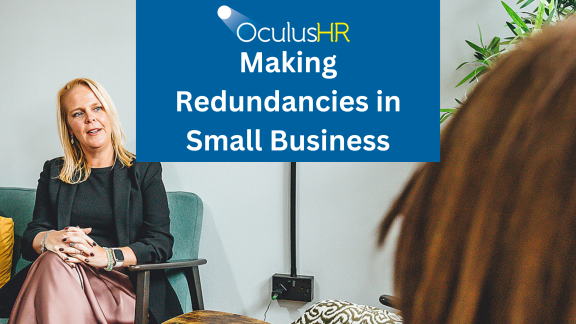
Difficult conversations are part of managing people. Most leaders and managers will face them sooner or later, whether it’s addressing performance, behaviour, attendance, communication issues, or conflict within a team.
And yet, even experienced managers can find themselves delaying them. That hesitation is rarely about avoiding responsibility. More often, it’s about wanting to handle things fairly and professionally, without damaging relationships or making matters worse.
The problem is that when difficult conversations are avoided, the issue doesn’t usually disappear. In many cases, it grows, becomes more complicated, and starts to affect more than just one person. This is where the real cost sits: not in the conversation itself, but in what happens when it doesn’t take place at the right time.
Why managers avoid difficult conversations
There are understandable reasons these conversations get delayed, particularly in busy environments where managers are balancing multiple priorities. Common concerns include worrying about upsetting someone, being perceived as overly critical, or not being able to manage an emotional response. Some managers also feel unsure about what they’re allowed to say, or whether they have enough evidence to raise the issue.
In other situations, the hesitation comes from empathy. If someone is going through personal challenges, or the organisation is under pressure, managers may not want to add to someone’s stress.
All of this is human. But it is also worth remembering that clear, timely conversations are often the most supportive approach, even when they feel uncomfortable.
The hidden cost to the business
Avoidance rarely creates a single, obvious problem. Instead, it creates several smaller ones that build over time.
Issues become patterns
When concerns aren’t addressed early, behaviours can become ingrained. By the time a manager decides to act, the situation often feels more serious, which can lead to heavier conversations and more formal action than would have been necessary at the start.
Time and energy are drained
Managers often spend far more time worrying about a conversation than the conversation itself would take. The issue becomes background noise, a constant distraction that takes up headspace, affects decision-making, and pulls attention away from more valuable work.
More formal processes become necessary
A simple reset conversation can often prevent the need for formal performance or disciplinary routes. When issues are left too long, businesses can find themselves needing structured processes, additional documentation, and a longer timeline, all of which increases pressure on the manager and the employee.
Risk increases
From an HR perspective, delayed action can create risk. If a business eventually needs to move into a formal process, it is more difficult to show that expectations were clear and that the employee was given reasonable opportunities to improve. Early conversations create clarity and a stronger foundation for fair management.
The impact on the wider team
Even if the issue centres around one individual, avoidance rarely stays contained.
Teams are perceptive. They notice when someone consistently misses deadlines, behaves inappropriately, or doesn’t pull their weight. They also notice when those issues aren’t addressed. Over time, this can cause frustration and resentment, particularly among high performers who feel they are carrying more than their share.
Avoidance can also create mixed messages about standards. If expectations are unclear or inconsistently enforced, it becomes harder for the team to understand what good looks like. That is when morale and motivation can start to dip, not because people dislike rules, but because they value fairness.
The cost to the individual involved
It is easy to assume that avoiding a conversation is kinder. In reality, it can be unfair to the person involved.
If someone is underperforming or behaving in a way that is causing concern, they may not fully realise how it’s being experienced by others. They may think they are meeting expectations, or they may be struggling silently and unsure how to ask for help.
When feedback arrives late, it can feel like a shock. Employees may feel blindsided or judged, particularly if the issue has been discussed informally elsewhere but not addressed directly with them. Early, respectful conversations give people the chance to adjust, improve, and feel supported, rather than being surprised later by a more formal approach.
What avoiding the conversation can look like (in real workplaces)
Avoidance is rarely obvious. It often shows up in everyday work habits, for example:
- A manager rewrites someone’s work instead of addressing repeated errors
- Team members quietly pick up the slack rather than raising the issue
- A manager stops delegating to one person to avoid disappointment
- Someone’s behaviour is talked about in private, but never addressed directly
- Issues are pushed down the road until appraisal time, when they feel bigger than they needed to be
None of these solutions really solve the problem. They often create additional pressure on the manager and the team, while leaving the root issue untouched.
What effective difficult conversations actually look like
A common misconception is that difficult conversations have to be confrontational. They do not.
The most effective conversations are usually calm, clear, and proportionate. They focus on what has been observed, the impact it is having, and what needs to change. They also allow space for explanation, context, and support.
A strong approach typically includes:
1) Start with facts, not opinions
Use specific examples of what you’ve seen or what has happened, rather than general statements.
2) Explain the impact
This helps the person understand why the issue matters (for the team, for customers, for deadlines, for quality, or for culture).
3) Clarify expectations
Be clear about what ‘good’ looks like and what needs to be different going forward.
4) Invite perspective
There may be underlying causes: unclear instructions, workload pressure, personal issues, confidence, training gaps, or misunderstandings.
5) Agree next steps and support
This might include additional training, clearer check-ins, a short-term improvement plan, or adjustments to ways of working.
Handled this way, the conversation becomes a practical reset, not a personal criticism.
Supporting managers to handle conversations early
Many managers avoid difficult conversations because they do not feel equipped. They may be unsure of the wording, the legal risk, or how to keep the conversation constructive.
This is where having clear HR guidance makes a difference. When managers have access to practical frameworks, sensible templates, and the reassurance that they are approaching issues fairly and consistently, the barrier to action reduces significantly.
It also creates consistency across the organisation. When managers are supported to have these conversations early, it becomes part of a healthier culture: one where expectations are clear, feedback is normal, and people feel managed rather than avoided.
Taking the steady approach
Avoiding difficult conversations is understandable, but it often creates more complexity in the long run. Addressing issues early, calmly and fairly, protects working relationships, supports individuals more effectively, and reduces risk for the business.
If you would like support in managing a specific situation, building manager confidence, or creating a consistent approach to performance and conduct conversations, Oculus HR can help you take the next step with clarity and confidence. Get in touch with our team today.